Transcribed from the 20 February 2026 episode of Syria: The Inconvenient Revolution and printed with permission. Edited for space and readability. Listen to the whole conversation:
Sometimes in trying to understand certain struggles we have to prioritize a reverse hierarchy: the voices that are often the easiest to dismiss might have to be the ones we pay the closest attention to.
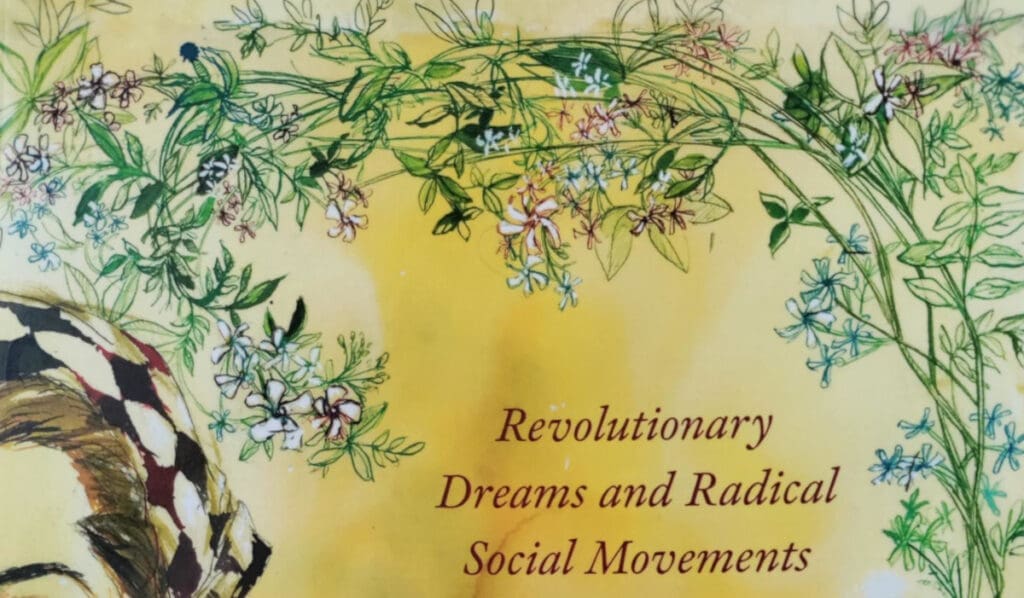
Leila Al Shami: Hello everyone, welcome to another episode of Syria: The Inconvenient Revolution. I have with me today Dr. Noor Ghazal Aswad, who has recently published a book called Searching for Solidarity: Revolutionary Dreams and Radical Social Movements that came out in October 2025. Today we’re going to talk about the book and about solidarity in general.
Welcome, Noor, congratulations on the book and thank you for joining us. Would you like to introduce yourself?
Noor Ghazal Aswad: Hi there,I’m Noor, thank you, Leila, for having me. I’m excited to be in conversation. I’m a Syrian-American author and academic. My full-time job is at the University of Alabama, but I’m also very involved in advocacy for Syria.
I was born in exile, so I have a long history of having a lot of connections to my homeland despite the geographic distance. This book is the product of years of thought, but my own personal and family history is one of the reasons I was driven to engage with the revolution that happened in Syria.
LS: Tell us more about how you went about this book and why it was so important for you to write it at this time.
NA: There’s a lot of beginnings to the book; I can keep going backwards in time to the reason I eventually felt compelled to write about it. I have a very clear memory of being a graduate student at the University of Memphis at the time, and I was also an immigrant to the US having my own visa issues and a lot of drama and uncertainty with that.
At that time, 2015-16, is when the Syrian refugee crisis was at its height, and it was very dominant in the media. I was fascinated with the ways American politicians, the president and governors, were all engaging with the imperative to either accept or reject these refugees, who were not necessarily coming to their shores (the US is more removed) but there was still this question of whether these immigrants or refugees were desirable.
In particular, I remember the governor of South Carolina, Nikki Haley (she later went on to be the US ambassador to the UN) actually wrote a letter to secretary of state John Kerry asking that her state be allowed to not accept refugees. The way she argued for that was fascinating to me, because she acknowledged that she was from a family of Indian immigrants and was proud of that heritage, but made an exception of Syrians, saying Syrians are different—and this isn’t about not wanting them, it’s about “keeping the terrorists out.”
So I remember feeling a lot of indignation and fury at the ways Syrians were being depicted. Combined with that, at about the same time, the image of Alan Kurdi was circulating—this visceral image of a two-year-old boy with his face down, wearing a little red shirt, and his little tiny boots on. There was something very powerful about that image; it ricocheted across the world. I remember being very moved by the image, and part of my felt glad this was getting some attention, that people were beginning to notice what was happening in Syria.
At the same time, I was very critical of the spectacle it made of suffering, and how in some ways it was being framed as a humanitarian crisis that we were invited to gawk at, to look at the spectacle—inviting judgment, in a certain way, and limiting the vision of who is deserving of solidarity. The figure of the child is easy to feel compassion for, but what was missing from the narrative was the revolutionary dead: those who had in fact given their lives fighting for dignity, for freedom—and also those who were still fighting.
The roots of the crisis were sometimes seen to be a more complex narrative to stand in solidarity with. That’s when I began to feel that we cannot just look at the refugee crisis by looking at the symptoms of it; we must understand that the refugee figure is really part of this bigger movement that is happening in their homeland.
LS: You talk in the book about erasure; how Syrians were invisible. Why do you think it was that Syrians were not part of their own story?
NA: The Syrian case is fascinating for many reasons. It was one of the first revolutions that was almost completely documented online; it was archived in real time as it was happening. There were millions of hours of footage—interviews, tweets, videos on YouTube—documenting the revolution for the world. It was rendered entirely visible online, but it almost didn’t seem to matter when it came down to the actual aid that was offered or people coming in to support Syrians.
There were no no-fly zones or humanitarian corridors; weapons and military aid for the Free Syrian Army were never sufficient to move the needle in terms of the dynamics of power. There was a deadlock at the United Nations Security Council that prevented Syria from every being directed to the International Criminal Court. So in the end, the international community might have offered some piecemeal help here and there, but it was never able to return a single refugee or release a single disappeared dissident or innocent Syrian out of Assad’s jails.
In the end, it’s the revolution of one million martyrs—what is the reason for this? It’s a conundrum. There’s all this evidence and yet the world doesn’t seem to hear the stories. In the book, I go into a deeper exploration of the cataclysm of factors that contributed to this, but first of all I would say there was an ironic situation in which this oversaturation of information actually generated uncertainty about the crimes that happened.
You can read Lisa Wedeen for more on this. She talks about the “aggregation of talking heads.” Others have called it “commonplace witnessing,” where everybody feels entitled to share an opinion and to have authority in explaining what was happening. The oversaturation of information actually was very effective at making very simple matters appear complex, and complexifying complex matters [further]. Even accounts of people or institutions that lacked authority or credibility were given space to flourish.
That was enough to cast doubt—we saw it of course with the chemical weapons attacks, when Syrians were accused of killing themselves. There is this atmosphere of doubt that makes it very easy for people to disengage, so we end up saying, Okay, something bad happened, we don’t know what it was or who did it, so it’s much harder for anybody to take responsibility, and people start to polarize based on what they already think, their pre-existing ideologies. Then there are disinformation campaigns by hostile actors—and of course we still see this today in the case of Syria.
The final thing I hone in on is the skepticism we have towards those who resist. Very often they are demonized, and also they’re not seen to be “civil.” They are perceived to be uncouth, or they’re confined to lesser echelons of knowledge. They could be quoted by a journalist or an analyst but never really taken as political thinkers with political visions and constructors of a future for Syrians. They’re seen to be emotional, they “lack objectivity”—they’re dismissed in myriad ways as subjects we should listen to.
Of course, a lot of the analysis of the revolution I’ve found, the books I was buying about the revolution, often were emphasizing the political science perspective—which is important, but often would pay more attention to the dimension of proxy war, geopolitics. What happens is a lot of grassroots voices and stories get completely obscured and never paid proper attention to.
LS: It’s a very similar rationale for why Robin [Yassin-Kassab] and I wrote Burning Country, feeling the same frustrations and the real need to bring voices from the ground to international audiences as a way to engage in the debate.
You talk in the book about the importance of centering the radical subject. Can you explain what you mean by that, and why that’s so important?
In the context of those who were living this revolutionary moment, there was an understanding that “if something happens to me, you will continue to struggle.”
NA: As I went into it, I began to realize how profound these stories were; they were extremely intense. They gave me cause for hope, and also despair. I began to see that these were not just revolutionaries in the abstract: they fell into a very wide spectrum of revolutionary activity. They were protesters, they were human rights activists, they were cleaning up the squares, they were medics and first responders.
They emerged at this moment of rupture that we always see at the start of revolutions, where there’s a shift in social consciousness. They were no longer seeing themselves as victims or as the oppressed, but they began to see they had agency and power, so they would escape these infrastructures of power with a willingness to make history. They were embedded within a revolutionary practice, and we can see from the kinds of revolutionary activities Syrians were engaged in how much this was happening.
For instance, people would tell me, I was picking out a sniper with my zoom lens, or shifting between their weapon and their camera. Or the way Khaled al-Issa talked about how they were cleaning the squares, organizing the protests, taking dead bodies out, finding ways to take certain people to Turkey for treatment, talking to the media. They were embedded very deeply within this revolutionary world.
I began to realize they also had this fascinating certainty about liberation. Not only that, but in their minds, freedom would happen tomorrow, it was just on the horizon. Ghiath Matar, for instance, the famous peaceful activist who took out flowers to give to military men: in his final will that he wrote, though he was still such a young man, he says, Remember me when you celebrate the fall of the regime, and know I gave my blood and soul for that moment.
We see it with Abdul Baset al-Sarout, when he goes out in the very beginning, in the square in Homs, and says to the sniper, Listen, here is my neck and here is my head! That’s the kind of defiance they had. They were engaged in very high-risk dissent, and they knew they were risking disappearance, debility, and even death.
We see it in Majd Shurbaji, the famous (for Syrians) revolutionary feminist. She talks about how, in her mind, she saw they would be celebrating in Umayyad Square [in Damascus] within days.
They all had what I call a “istimata,” a willingness to sacrifice for the struggle. This vision and hope for a better world wasn’t just a dream that we talk about without actually backing it up; it really shaped the ways they moved in the world and they ways they felt and fought and acted. It wasn’t just a passionate physical act for them; it was motivated by a higher consciousness and understanding of how they needed to put their life on the line, in embodied and embedded ways, to change their situation.
LS: You’ve mentioned a few of the people you profile in the book and the stories you tell. How did you develop your theories from their stories?
NA: It was a long process, but I wanted to pay close attention to what I call their affect, the way the mind and body worked together for these revolutionary actors. I began to delve into an archive of revolutionary activity that involved chants and songs and protest, graffiti art, interviews they were giving, sometimes even footage they were uploading online. I slowly began to create this archive, and I wanted to pay heed to what they were communicating among each other and also transnationally, beyond their borders, to those who were outside.
From them, I began to notice these things. That’s how the book became organized eventually: there’s a chapter on testimony, thinking about what kind of testimony these figures they have, what kind of witnessing they were engaging in. There’s a chapter on post-memory, which we can talk about; on peripherality, the way they were communicating with others around the world who were also in different kinds of struggles, and the inventive and creative ways overtures were made; and on hope.
Hope is important for the longevity of struggle in the face of death and necropolitics. It’s very easy to give up hope when you’re at the protest and your friends and colleagues are being murdered right in front of you. You’re almost attending your funeral—how do you come back from that? How did the revolution go on for almost fourteen years despite the very best attempts of the regime to suppress the movement?
LS: These people had such amazing courage to be able to go out day after day in such horrendous circumstances.
NA: I was really in awe of it. As academics, it’s easy to become cynical. It’s easy to poke holes in the ways these radical social movements are lacking, the ways they may have deficits. There was plenty of that being done, both by the left and by those in the West who were unable to see the beauty of what was happening in this inconvenient and impossible revolution.
There’s almost an atheistic refusal to believe that people would actually go out in the streets and do this, so I wanted to put a pin in this cynical perspective we have. You see it when people say they were being paid to go out, that this was all a conspiracy, that the regime was an anti-imperialist entity in the “Axis of Resistance”—all the ways we remain stuck to our own ideologies. We become easy targets for propaganda and conspiracy if we’re not very intentional about the way we approach these revolutions.
That’s why I began to look into anti-colonial thinkers like Franz Fanon, and how he says, The last shall be first. How do these actors, the very actors we critique as an impediment to solidarity—what if we approached them purposefully and strategically, and we don’t just contemplate them for a second and then move on to the next, but we’re careful in the way we pay attention to them? What does it mean to pay attention to somebody?
If you look at the Latin roots of the word “attention,” it’s fascinating. It’s not just glancing at something: it’s being open, receptive, affirming, and understanding these struggles. Solidarity really has to be a process, and it’s an uneasy process because oftentimes we have a lot of stereotypes. There’s a loathing of difference many of us have, when people speak in languages we don’t understand, when they are racialized in certain ways that make them unintelligible to us. It demands a conscious understanding of not only where we’re standing but the ways we see others.
How can we listen to these voices instead of intercepting them before they even have a chance to speak?
LS: That’s a good question. Building solidarity is not easy in practice, because you’re crossing geographical and cultural divides; people don’t have context.
In the book, you ask the question of how we listen across distance and how we can act ethically in solidarity with distant others. How do we create those possibilities for solidarity?
NA: I talk about the importance of attention to certain voices. The important thing, when thinking about how to create solidarity, is realizing that solidarity is a hopeful act in and of itself. Very often, solidarity begets solidarity.
We see, for instance, in the way the revolution started—in and of itself it’s an example of how solidarity is enacted. The first protests that came out initially were in solidarity with Egypt and what was happening in Tunisia; Syrians were itching for this. Then in Dera’a, we saw the graffiti of two teenage boys threatening Bashar al-Assad saying his turn was next, and Dera’a became the first subject for the repression of the regime. It’s fascinating to see how other cities around Syria then stood up in solidarity with Dera’a.
There’s a famous song by Wasfi Massarani, “Dera’a Tunadi” (“Dera’a is Calling Us”). The regime would focus on repressing one area, and then the other one would rise up almost in this domino effect of people rising up among each other.
I wanted to talk about the way we have to pay closer attention to the lived lives of these radical subjects and how they instruct us, how solidarity really happens. One of the stories that we can talk about is that of Bassel Shehadeh, which is a story of how solidarity is created, and in particular about the importance of hope as the mechanism for the longevity of struggle.
Bassel Shehadeh’s story is interesting—and there are many other revolutionaries who also fall into this fascinating “selseleh bashariyyeh,” this “human chain of hope.” I began to notice they were engaging in what I call hope talk. Hope talk can be an unspoken thing where, in the context of those who were living this revolutionary moment, there was an understanding that If something happens to me, you will continue to struggle.
But sometimes it was also a discursive practice, where there was what they called “ahed” (an oath), or “iltizam dam” (a blood contract); there was an “amaneh” (safe-keeping) among those in struggle—so it was also very anticipatory, predicting the need to rectify the conduct of others in the future. You see it, for instance, between Ghalia al-Rahal and Khaled al-Issa. I was listening to a lot of the footage that Khaled al-Issa had uploaded, and Ghalia as well, and it was interesting that Khaled actually told his mother on camera: Remain steadfast. If something happens to me, you continue the struggle.
After his death, she would reflect on it. Journalists would ask her, Why are you still doing this? and she said, I feel compelled. I’m stuck within this revolution; I can’t leave it at this point, because I have a debt to those who made me promise to stay—to her son’s prediction into the future that something would happen to himand that she would have to continue without him, continue being faithful to the revolution.
In these authoritarian regimes, there is a lot of intent to completely obliterate and suppress memory. They’re not only demolishing cities and humans, but they want to demolish our memory.
Bassel Shehadeh’s story is also fascinating in the way it also enacted solidarity over the long term. He was a Syrian Christian; he also called himself a “Christian Muslim.” He was around twenty-seven when the revolution started, was initially disappeared into the regime’s dungeons and came out a month later, and he actually went to Syracuse for a Fulbright scholarship. Just a few months later, for his winter break, he decided to return to Syria, and he beautifully expresses the sentiment and makes concrete the way the radical subject thinks about revolution:
How can I leave this dream that is coming true? How can I tell my children one day that I went to take care of my future when my homeland was calling for me?
So he went back, and you really see how he takes this hope of a more beautiful future for Syria and makes it concrete. He makes it tangible in the ways he was training photographers; he was filming protests and teaching other journalists how to edit, how to create compelling stories. He would go out even at risk to his own life. There were days when the shelling was so heavy his friends would say, Let’s just stay in today, and he was like, No, this is more important than anything else.
He spoke to the press; at one point he was on Democracy Now!, and if you listen to his interview you can hear the bullets in the background. And yet he felt compelled to testify—he was talking about the fact that the UN monitors hadn’t arrived to witness what was happening. He felt forced to report and be part of the story. Amy Goodman even tells him, Bassel, if you can’t talk, if it’s dangerous for you, don’t worry. And in spite of that he felt compelled to transmit to the world what was happening.
Unfortunately, of course, he died. He was killed in Bab al-Sebaa neighborhood in Homs, on a day when in fact many rebels had decided to stay home, but he had wanted to report because of the complete media blackout that had happened. Of course, with his funeral—footage online is incredible, because the regime had taken all the electricity in the area so it was completely stark black. You see his friends going out nevertheless with the flashlights on their phones, singing for him.
It’s fascinating, because for people who were not part of the revolution, Bassel’s story was powerful in compelling them to join the revolution—even when the regime besieged his parents’ home they still went out. Father Paolo Dall’Oglio presided over the funeral, and to my knowledge he had not been vocal against the revolution up to that point. But he was so moved by Bassel’s story that he then began to stand in solidarity, and he would pray with Free Syrian commanders; he would write an open letter demanding the transition to democracy.
But one of the most stunning things that people don’t often pay attention to is that a lot of the footage that is now uploaded online as full films credited to Bassel actually were not completed by Bassel at all. There is his movie I Will Cross Tomorrow—he was filming that when he was killed, so there were collectives like Abounaddara who took that footage and finished it for him. They did this with a lot of different revolutionaries who were being killed or debilitated.
At the end of the movie you see that they dedicated it to “Brother Sniper,” and say, I will cross tomorrow. Your children will see me, and they will know what happened to me. They were inspired by this World War Two “Song of the Partisans,” which goes: Friend, if you fall from the shadows, I will come in and take your place.
They did it as well with Ali Ferzat, the political cartoonist whose hands were injured by the regime as a way to silence him and push him into obedience; [Abounaddara] went to the hospital and took a picture of him, cartooned it themselves, and signed it with his name. People don’t know that wasn’t actually his drawing.
LS: I always thought that was a self-portrait, and I discovered from your book that it wasn’t.
NA: It’s incredible. People were amazed: How can he draw when his hands are literally in bandages? That was how the resistance was happening. That was how, even with the regime’s violence and deliberate necropolitics against those in the social movement, others were taking up the struggle. That’s where we see the transference of solidarity, teaching us how we can stand up for others without credit to ourselves, without wanting to be in the limelight. It was motivated by being with others in the struggle.
LS: These stories became so famous for Syrians, and Syrians were moved by them to engage in the struggle, both within Syria as protests and revolutionary activity spread across the country, but also from Syrians in the diaspora.
What we were unable to get was solidarity from people internationally. You and I worked together, probably a decade ago now, on a campaign called “100 Faces of the Syrian Revolution,” in which we tried to tell online the stories of some of our heroes and the people who had inspired us, with the hope that people reading about them would get a better understanding of the revolution and be moved to act in solidarity with it.
In your book you talk about different types of solidarity. Could you explain that to us? It was interesting how you spoke about it.
NA: “Solidarity” is a very contested term in moral philosophy and in our own discourse. What does it really mean? I had to have a deeper dive into the ways it’s been understood in our society, and what kinds of solidarity these radical social movements were actually calling for.
It became clear to me that a politics of pity or sympathy was not solidarity. A lot of that understanding of solidarity hearkens back to the eighteenth-century understanding of solidarity that is based on geographic and cultural proximity and resemblance: seeing people who are similar to you. That shared humanity in itself is not enough, automatically, to create solidarity.
Instead, I began to see that solidarity at its most challenging is cross-cultural. It has to be what’s called “thick solidarity,” which is very attentive to the local dynamics of race, class, and economic struggle, of all kinds of specifics that need more attention and more time, more slowlness in how we approach them. Solidarity also has to be interventional; I quote Yassin al-Haj Saleh in the book when he talks about solidarity as “being partners in word and deed to change power.”
In the end, it has to take sides. It has to have a political dimension to it, where it takes a stance and demands us to engage with changing the dynamics of power. It’s more morally demanding, for those of us who might want to offer easy words of sympathy, understanding, and compassion, to actually want to do something for others.
That’s where I began to theorize solidarity as an ethical, emotional, and political capacity that grows as a process when we pay attention to certain kinds of subjects. A lot of it is canceling the noise that happens. Lauren Berlant talked about the “collective chaos” that we live in: especially in the news cycle where we’re constantly being exposed to crisis after crisis, we become immune or cynical, tired of all of this. I argue in the book that we have to have a limited vision, and an understanding that sometimes in trying to understand certain struggles we have to prioritize a reverse hierarchy: the very voices that are often the easiest to dismiss might have to be the ones we pay the closest attention to in how they are understanding the struggle.
LS: You talk a lot in the book about memory as well. Why is memory so important to you? And why is memory so important for Syrians as a whole now?
NA: In these authoritarian regimes, there is a lot of intent to completely obliterate and suppress memory. They’re not only demolishing cities and humans, but they want to demolish our memory. In the case of Syria, as in the case of many of these generational struggles for freedom, memory is two things: it is both inherited and it is contemporaneously experienced in the present. There’s an affective load that we inherit from our ancestors.
We see revolutionaries talk about when the revolution happened, they knew very well what would happen because we’d seen it in the eighties, from our parents. We’d heard those stories. The kind of memory transference there is within families, within these entrusted spaces, is different than the kind there is in day-to-day life going on the bus, going to school. It’s memory that’s inherited so intensely that sometimes you feel like you experienced it yourself.
There’s a chapter in the book where I talk about “Rafi,” who is a close family member who was killed before I was even born but whose story was powerful in shaping my own subjectivity, and my own eagerness for the revolution to happen, even before it happened. So when the revolution happened, I was already approaching it with this inheritance I had. This memory transference is important because it’s between those with whom you have duties of memory. You feel there is an obligation to remember what you’ve been told.
In that chapter, I lean on a Holocaust scholar called Marianne Hirsch; she has a fascinating book in which she looks at what she calls “postmemory”—the ways those who survived the Holocaust transfer collective and personal trauma to their children and grandchildren. These children have this “postmemory,” a memory of something they never experienced and yet which has bit them with a knowledge, with a resistive bearing, in how they understand revolution. It’s a knowledge legacy.
I’m sure you remember, Leila, when the revolution was happening and people were denying our stories—there was this war of narratives online. We know what the revolution is capable of; we’ve seen it before; we know them very intimately because we know what they’re capable of and what they’ve done. And we also inherited a lot of wisdom in how to approach the revolutionary moment, in how to engage in mechanisms to keep ourselves safe, to protect us, how to be smart in the ways we were resisting.
It results in a unique subjectivity in which you begin to see a “double credibility”—you have credibility in the moment you are living and the experience that radical subjects are having, but also that inheritance, which adds ethos and credibility to their very character. They know what they’re talking about, and yet they are still so often dismissed.
The Syrian story teaches us about how we can be in solidarity, to think carefully about not only the positions where we stand but also who we look to when we’re trying to make meaning of situations that appear to be controversial or unclear.
LS: I can definitely relate to that, because I inherited so much of my passion for Syria and my desire to be actively involved in Syria from my father and his own struggles against the Assad regime. But I also find it interesting, because the reason 2011 was such a moment that people went out to the streets was because the younger generation had forgotten the horrors of Hama and what came before.
I remember conversations with people from the generation above me, and they were terrified that their children were out in the streets. They didn’t believe we would ever succeed.
NA: That is true. We did see the older generation warning people about going out: This is going to result in your end. That’s interesting, because not everybody is going to inherit that will for resistance. My mother would talk about it; she says, When you are scalded, when you’ve been burned, sometimes you also elect to remove yourself. That has been misinterpreted by some scholars like Lisa Wedeen as being “al-ramadiyyin” or “gray people,” but I think it was deeper than that: for some, it wasn’t that they didn’t have a sense of what the regime was, but when they paid such a high cost themselves sometimes they decide that price has already been too high and don’t want to be involved.
It was definitely a wide spectrum of people who went out, whose parents perhaps were not involved—but for a lot of Syrians, the memories of the eighties were very much a private subjectivity. I draw comparisons: there’s the iconography of 9/11, the museums to it—it is aligned in people’s memory, and a part of the discourse still. But in the case of the eighties, there was a silence about it. That memory was very potent, because it was within the privacy of the home. That kind of subjectivity is not part of the public discourse as much. There are a few books on it, but it wasn’t something Syrians could speak about.
That potent subjectivity often appears invisible, but it has a big intensity in the lives of those who survived.
LS: You have a whole chapter in your book on exile. I wanted to ask you about the impact of exile, both on revolutionaries and on solidarity.
NA: I completed the book right before the regime fell. After it fell, I asked the press to send me back the manuscript, because I needed to complete the story. I felt that in the end, the book still stood true. My final conclusion was that even if solidarity is deeply desired, it’s not always necessary for liberatory outcomes. But Syrians are still making bids for solidarity.
The interesting piece for me (this is where I’ll come full circle) was looking at Alan Kurdi, this refugee, and the ways we were forgetting the revolution at home, but understanding that at some point (and this is still perhaps the case to some degree) over half the country was in exile. Some were internally displaced, into Idlib, into liberated zones, or outside the borders of the country.
Yes, many of them were refugees—just by virtue of crossing that border, they immediately become termed refugees or asylum-seekers—but many were also “revolutionaries in training,” to quote Robin [Yassin-Kassab]. They were revolutionaries who carry that subjectivity into exile; does their revolutionary story end there? For some, yes, perhaps. They have new predicaments, new extenuating circumstances for surviving in exile and making a living. But for some we also see that their resistance continues.
We see it for instance with the whistleblower who left, Farid al-Madhan, who was behind the Caesar photos, the reason the Caesar sanctions were implemented by the US. We see people who escaped Assad’s dungeons then writing about what the prison system looked like, the mass surveillance and torture that was happening inside the jails. We see the high regional court in Koblenz where Syrians start to do their best to have prosecutions of the criminals that were involved in the regime.
I wanted to shed light on the ways that revolutionary subjectivity wasn’t necessarily always tied to the geography of where you’re engaging in the struggle but sometimes can continue, and the ways people in exile were negotiating the decision to leave—or to go back—and also the ways they inhabited multiple contradictory positionalities and yearnings.
There’s a term by Ghassan Hage, diasporic lenticularity, which thinks about the different lenses and the ways [exiles] may be, for instance, in Paris but in fact they’re still sometimes in Syria. Fadwa Suleiman talks about how she was in Paris, and says, I look at the streets and see Damascus. She was having difficulty enjoying the new city she was in or being present in that moment, because she still had this subjectivity she was wrestling with.
That chapter delves deeper into the stories of those in exile and the ways they were negotiating how and whether they would continue their revolutionary struggle.
LS: You say in the book that the lack of solidarity caused a “second harm” to the victims of Assad’s counterrevolutionary war. Can you talk about the impact the lack of solidarity had on Syrians?
NA: I’m sure you can relate to this, Leila. Now it seems like we’re in a different time, and now when people negate our narratives it’s different, because we have our country back somewhat—at least we can go back.
But it was very painful, because you’re being killed, no one is standing up for you, and not only that, you are being demonized and ostracized—oftentimes by the very people who you’d think would stand in solidarity. I have a chapter in the book on orientation: the ways the left (I single out the left)—
LS: I’ve done that many times.
NA: “The anti-imperialism of idiots” is one of my favorite articles you’ve written!
But those who are often seen as your most likely allies, because they are so progressive on so many domestic issues—human rights, racial struggle, Indigenous rights—fail miserably when it comes to the transnational. It was extremely painful for many of us. I know a lot of family members who have become clinically depressed because of how depressing our situation was: not only were we being killed but we were being denied the opportunity to have our stories even heard.
There’s a wonderful book that I highly recommend listeners read: Ethical Loneliness by Jill Stauffer. She talks about the secondary harm of bystander complicity that survivors experience when those from whom solidarity is demanded fail to come to their aid, fail to help in redress, and often don’t even acknowledge or hear them. She describes it as being sometimes even more harmful and hurtful than the crime itself. They feel abandoned by humanity, cast aside—but she also talks about the failure to listen, and the cruelty of having your testimony completely ignored or dismissed.
She talks about this as “ethical loneliness” because it’s not just a social isolation: it’s a moral absence, or abdication of responsibility. The original violation in and of itself is grave, but it’s compounded when people don’t come in solidarity.
LS: I can definitely relate to that. With all the horror of everything that was happening in Syria—the daily bombings, the destruction, the chemical weapons massacres, and losing many friends of mine and also having many members of my family displaced—the worst aspect for me was not having solidarity with our struggle. It gave me so many sleepless nights and so much trauma, for the reasons that you’ve explained.
I find that a lot with Syrians who I speak to, the impact that had on them. It’s very difficult to keep going and struggle when not only do people not hear you and not recognize your struggle, but people are actively dismissing it or slandering you and speaking against you.
To wrap up, what lessons can the Syrian revolution teach us about solidarity for future struggles? Especially at this moment when there’s so many things happening around the world, what can we learn from Syrians?
NA: I was really careful when I wrote the book—I did not want this to be a book about Syria only, although in many cases it’s completely inspired by the Syrian revolution and the voices, stories, and testimonies of Syrians that are on every page.
Towards the end, I have whole chapter where I talk about the intersections between Black Lives Matter and the Palestinian liberation movement, and the ways many of these struggles around the world, on their face, might appear to be very different—there’s one against a settler-colonial state; one is a demand for racial justice among African-Americans—but how we can sometimes align our struggles or see them as related even if they aren’t identical. Many of these struggles are not supposed to be precisely the same—of course they’re not. But at their heart they’re about the quest for human dignity.
The final quote I end the book with is by Fadwa Suleiman: she says, Syria is not a geography, it’s not a country, but it is an idea. The Syrian story teaches us about how we can be in solidarity, the ways we have to lean in and think carefully about not only the positions where we stand but also the way we glance—who we look to when we’re trying to make meaning of situations that appear to be controversial or unclear—and also the ways we often tend to prefer familiar narratives and ideologies, and anticipate the world with those ideologies instead of giving space to those who often don’t have a voice, a podium to speak from, and engaging in that uneasy, laborious process.
Subjectivity doesn’t happen automatically just by virtue of deservingness; it needs to be a very slow process in which, sometimes, we might have to be humble in how we approach understandings of others, and realize we don’t know a lot, so sometimes we need to listen to what others are saying. I’m not saying we shouldn’t be critical of these kinds of subjects, but we don’t want to stab them with a knife at the time when they need us most.
LS: Thank you so much for talking to us, it’s been a real pleasure to speak with you.
NA: Thank you so much, Leila. It’s been an honor to speak with you today.